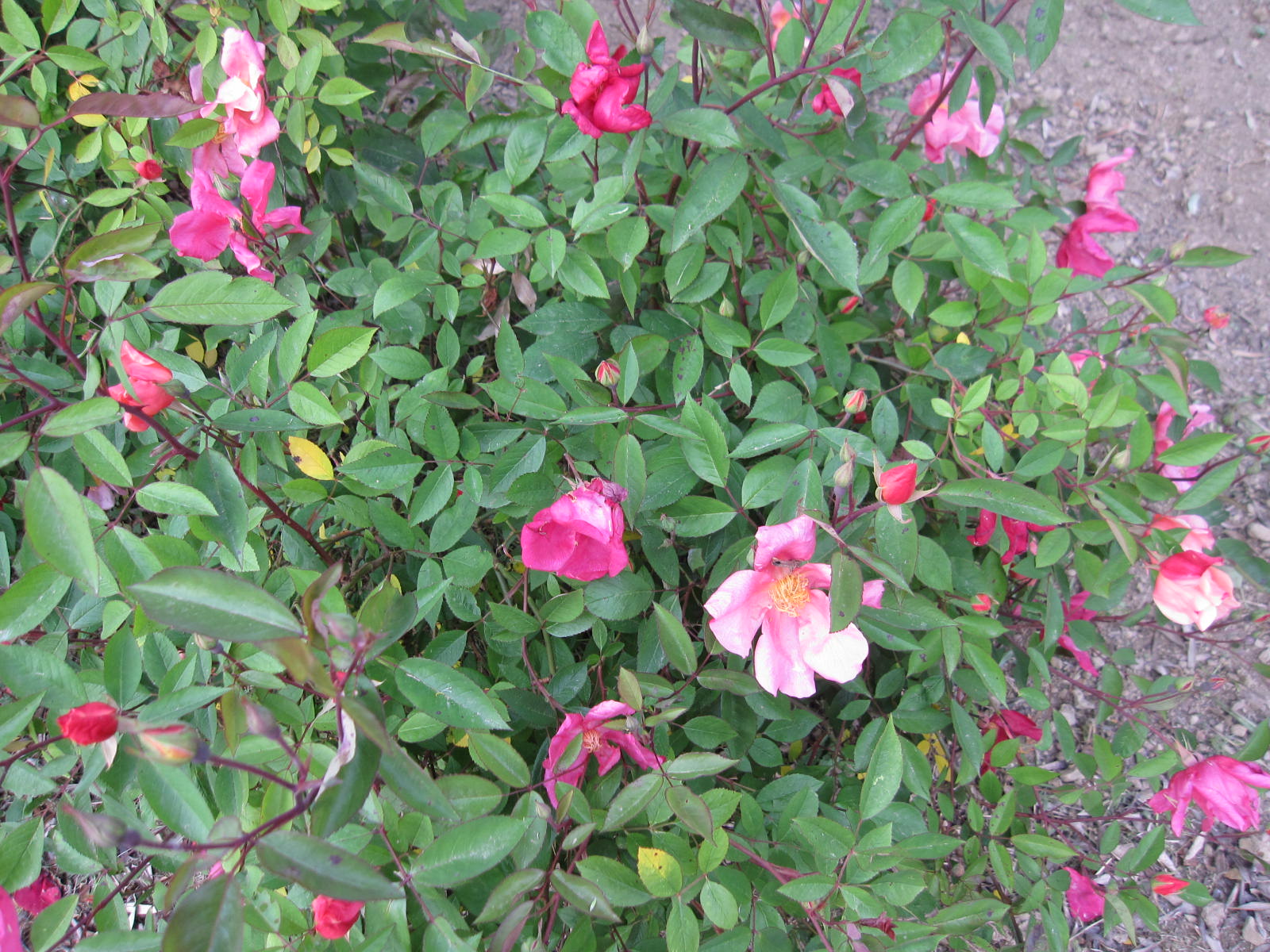
December and a few days of chilly but bright sunny weather gets me out into the garden busy planting those shrubs and bulbs that really ought to have gone in ages ago. And a new ornament for the garden - a rather large but sophisticated terracotta pot, seen here with the China roses in full bloom and berries of Pyracantha.
Y
Showing posts with label Topics. Show all posts
Friday, December 6, 2013
Thursday, June 6, 2013
Cistus - why do we see so few in Italian gardens?
![]() |
| Wild cistus |
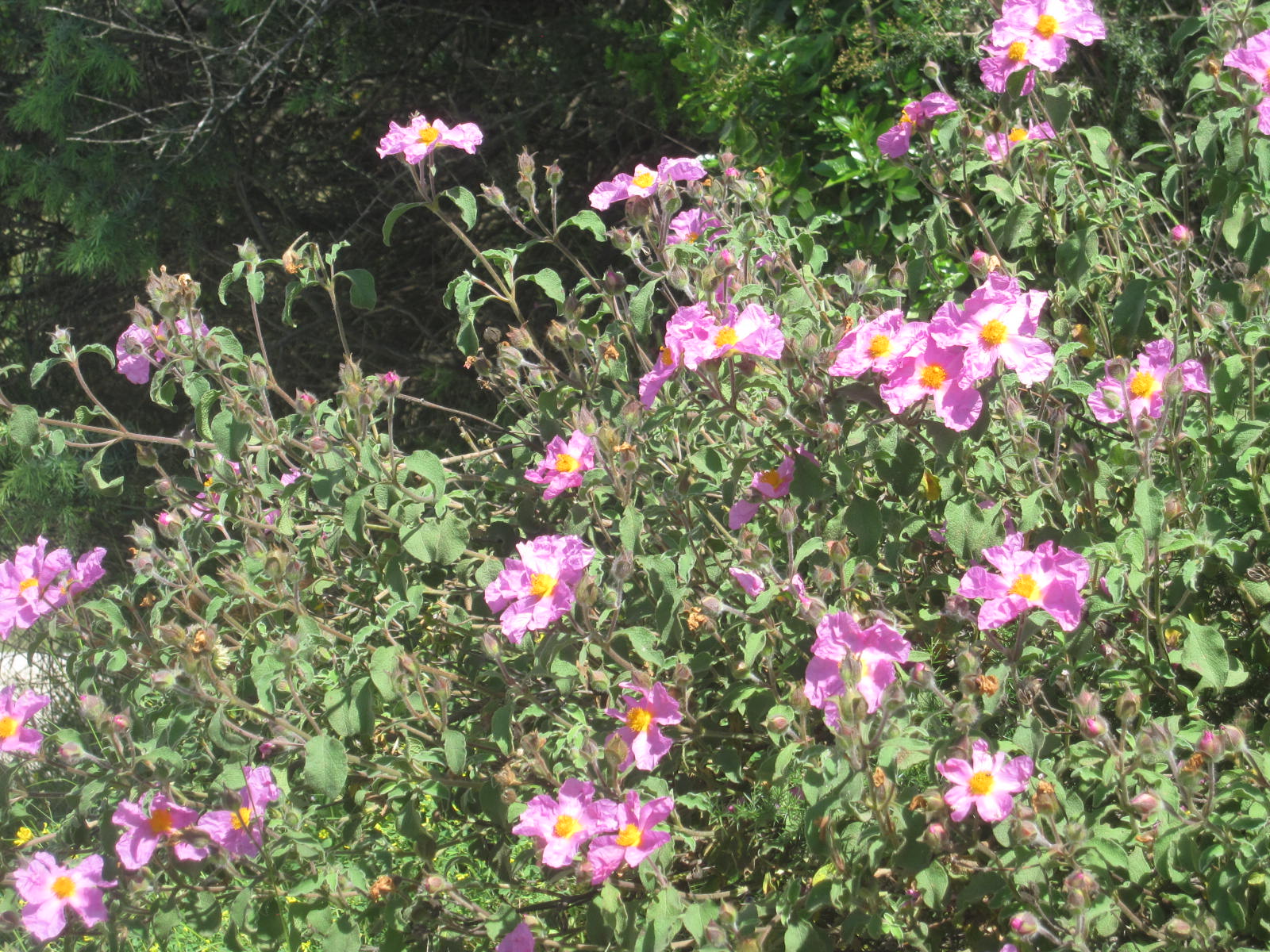
In the garden cistus is invaluable: it will tolertate extremely poor conditions and drought. Most cistus also seem to be resistent to the cold. I could not have managed without this plant to cover unsightly piles of rubble and to underplant shrubs not to mention the colourful planting on the teraces. But many Italians do not even know that it exists as a garden plant. Colours and patterns of flowers are very varied and some grow tall whereas others as low growing. There is even a later flowering Yellow 'tardiflorens'. What's not to like?
Y
Wednesday, May 22, 2013
GBFD - leaves on a wet day
I went with the Giardino Romano yesterday to visit the garden of the late and well respected gardener Joan Tesei. The weather was pretty grim and either raining or about to rain. Whilst the flowers & roses were pleasant and just about holding up under the wieght of water, the foliage really carried the day. Here is a Vitex agnus castus silhouetted against the cloudy sky, perhaps all the more dramatic under the dismal conditions. It had been placed here on a corner very carefully so that its foliage could be appreciated in profile. Happy Gardeners' Foliage Day.
Y
Y
Monday, May 20, 2013
Reflections on Paul's Himalayan Musk
This rampant rambler blooms for a short time but what other plant can give a display like this? The rose has climbed up over the roof to the chimney and down the other side! Y
Late season Iris
I had not appreciated how varied Irises can be, not just in terms of colour and petal form, but also growth habit and flowering time. This group of late flowering irises are rather pleasing, arriving at a time when the first rush of May blooms is starting to relent: Iris 'Riverboat Blues' with darker Iris 'Indigo Princess' behind. I bought a selection of irises produced by specialist grower Giardini Toscani in Cosentino, near Arezzo. Sadly the labels have been lost so I have had to search the on-line catalogue to remind myself of their names: Giardini Toscani Y
Thursday, May 16, 2013
Irises in Florence
Sorry to have missed GBBD Yesterday but I went to Florence to visit the garden of Irises and see the annual iris competition. The site is
managed by a voluntary group Societa' Italiana dell'Iris (donations box at the gate) and is in its 57th
year. The garden is easy to get
to – we took a train to Firenze SMN then taxi to Piazzale Michelangelo and
afterwards walked back to Ponte Vecchio via the rose gardens. The Iris
garden is below the ancient city walls in an olive grove and slopes down quite
a long way. There is a
large area at the top where the winners of every competition since 1957 are on
show. The
grouping of so many different irises in the olive grove was very nice indeed. Strange how they are so different in form and colour but blend together beautifully. The competitors for next year as well as the current year are in large
beds: they seem to plant them and get the plants established a year in
advance. Highly recommended - the garden is open until 20th May. Y
Friday, April 12, 2013
Bulbs . why don't we see more of them in Italian gardens?
Today the wind is blowing a gale - more than 40 km/hr - and the dessicating effects are devastating, undoing all the good of the winter rains. So a chance to reflect on what is undoubtedly the most cheerful aspect of the garden: spring bulbs. In fact 'Cheerfulness' is one of my favourite daffodils, both for the complex flower form and scent.
But here in central Italy we see very few bulbs, at least as compared with England, and rarely in major planting schemes and drifts. I prefer more natural plantings and oten use species bulbs such a Tulipa Clusium. Not only are they more subtle coloured and delicate but more likely to come back in subsequent years.
Strange really, because a lot of familiar bulbs originate from the Mediterranean and in spring you can see fields of wild daffodils (Jonquils etc) in Sicily. Also many bulbs come from climates where the summer is hot and dry but winter very cold; Tulipa Turkestania is another of my favourites.
Not forgetting corms either: Anenome Coronaria is also a native flower in central Italy and deserves to be more widely appreciated.
Friday, March 22, 2013
Spring?
For me spring starts when the almond tree outside the window start to blossom. The first buds opened two days ago and now we have showers of snowy petals drifting in the strong winds. When I was a child we took our spring timetable from the damson tree at the end of the garden; always the first to bloom.
Y
Y
Wednesday, September 19, 2012
Badger attack

Badgers have broken into my garden again and are causing terrible damage, digging up entire plants and throwing them aside; huge holes everywhere, many plants dead. I know I blame them for everything but can't help agreeing with Matt on this occasion ....
Y
Saturday, September 8, 2012
The desert blooms
Finally the weather has broken and we have had rain. The drought lasted for over 3 months with record temperatures, high 30s, from early June onwards, plus hot dry winds to blow away any last remaining moisture. But the worst event is one that is easily overlooked: the winter drought. There was no rain to speak of from October to February, the time when the plants expect to regenerate and the aquifers refill. Then there was the snow and record cold, down to minus 12C, and the garden approached spring in a state of shock and distress.
I have not had the heart to post photos of the garden during the height of the drought because it looks so dreadful and burned out, but two days ago the heavens opened and we had a decent rainstorm and temperatures fell by 10C. The plants have immediately showed signs of responding to the rain and it is interesting log which plants did well and which disappointed during this extreme period of hot weather.
Plants that I have never watered at all but seem to have survived (unless planted this year, in which case they did get the occasional water):
Of course these plants each have their own survival mechanism and some looked pretty dreadful - e.g. the phlomis turned into a bundle of dry twigs; cistus went brown and curled up their leaves and looked almost dead, the medicago dropped all its leaves. But already there are new shoots on the phlomis, the cistus has become green again and small points of new green growh on the medicago.

Some plants showed stress in certain locations in the garden but in other places needed no water at all:
The China roses have survived but look terrible having shed most of their leaves and gone into a state of 'estivation' despite my watering them once every 10-15 days. I can see some new red shoots springing from the base of Louis XIV already after such a short time but we will have to wait until spring to know what the real damage has been.
Now hoping for a wet winter.
Y.
I have not had the heart to post photos of the garden during the height of the drought because it looks so dreadful and burned out, but two days ago the heavens opened and we had a decent rainstorm and temperatures fell by 10C. The plants have immediately showed signs of responding to the rain and it is interesting log which plants did well and which disappointed during this extreme period of hot weather.
Plants that I have never watered at all but seem to have survived (unless planted this year, in which case they did get the occasional water):
Abelia
Ballota
Buplerum
Cistus
Coronilla
Cotinus
Escallonia
Eurphorbia
Lavender
Medicago
Nerium oleander
Perovskia
Phlomis
Phillyrea
Pistacia
Rosa Banksiae
Rosmarinus
Santolina
Teuchrium
Thymus
Of course these plants each have their own survival mechanism and some looked pretty dreadful - e.g. the phlomis turned into a bundle of dry twigs; cistus went brown and curled up their leaves and looked almost dead, the medicago dropped all its leaves. But already there are new shoots on the phlomis, the cistus has become green again and small points of new green growh on the medicago.

Some plants showed stress in certain locations in the garden but in other places needed no water at all:
Achillea
Buddleja
Ceanothus
Cotoneaster
Pittosporum
Punica
Senecio
Viburnum
Location differences were affected by the amount of sun/shade and soil type: where the soil is heavy clay after a period of drought the ground became so dessicated that great fissures opened up and exposed the roots of nearby plants - instant disaster. Gravel mulch helped quite a lot but not completely.The China roses have survived but look terrible having shed most of their leaves and gone into a state of 'estivation' despite my watering them once every 10-15 days. I can see some new red shoots springing from the base of Louis XIV already after such a short time but we will have to wait until spring to know what the real damage has been.
Now hoping for a wet winter.
Y.
Saturday, June 11, 2011
Filippi redux
On the way back from England by car, taking a detour via Montpellier gave me a chance to check up on Olivier Filippi's garden & plant nursery to see what was in flower in June. My previous visit in October found a riot of colour so my hopes were high. Of course the Cistus and Phlomis would all be over so what to see? The answer is that it looked just like on the cover of his book. Lots of deep blue Lavender and Calamint set against yelows of Santolina, Achillea and Helichrysum. The stars though were the low growing Teucrium with intense red-mauve flowers. Red highlights were also provided by Euphorbia Rigida. A big surprise was the bright yellow Cistus x tardiflorens which, as the name suggests, flowers later than the other Cistus. I feel my autumn plant order coming on already ...
Y
Thursday, June 2, 2011
Thursday, May 5, 2011
Roses already
Roses are blooming already. I expect to see the Banksiae very early - this year I have Purezza in flower for the first time as well as the udsual Lutea - but also the Chinas are covered in blooms: Mutabilis, Cramoisie Superieure, Old Blush, Pompon de Paris, Louis IV, Sanguinea. With any luck they will tough out the drought and keep blooimg through to autumn.
Y
Tuesday, April 26, 2011
Nasty business
Spring has com to the olive grove with the new intensely green grass and wild flowers forming a luxurious carpet. Horrifying then to see that in the neighbouring grove the landowner has sprayed herbicide around every tree - presumably to save the effort of mowing. Local people have got together a petition to the Comune against the evil practice. But then I saw a truck rumble past with a Provincia di Perugia badge and a huge tank, happily spraying all the roadside verges. Our road is now a parallel stripe of brown dead vegetation. What hope is there?
Y
Tuesday, April 19, 2011
Bulbs - gone in a flash
I planted around 1,500 bulbs last autumn and the rolling display of colour that I had hoped for lasted days rather than the promised weeks due to the heatwave. In fact i did not manage to catch some of the tulips on camera. Oh well, being species types I hope to see them again next spring but a bit more leisurely, I hope.
Y
Subscribe to:
Posts (Atom)